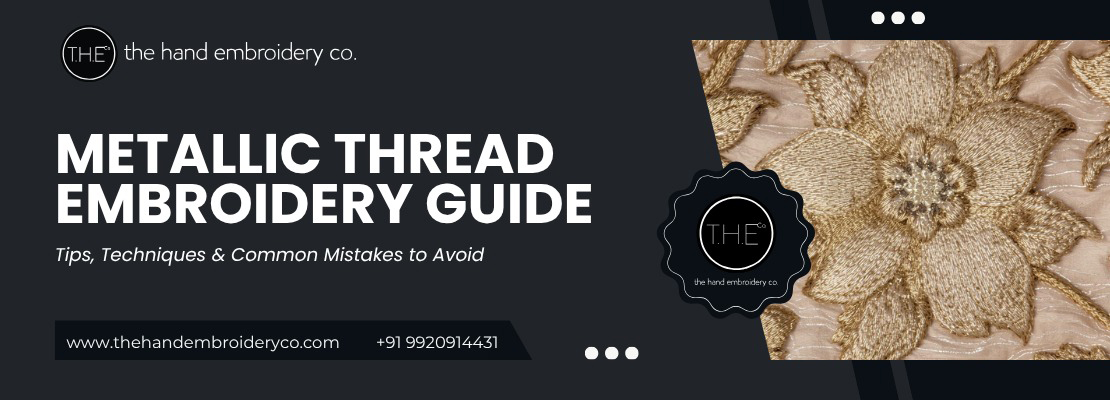
Metallic Thread Embroidery Tips and Techniques
Metallic thread embroidery is where craftsmanship meets luxury. The shimmer of gold, silver, and copper threads has the power to transform even the simplest fabric into something extraordinary. From bridal couture to premium corporate branding, metallic thread has become a defining element of high-end embroidery.
But here's the truth most beginners (and even professionals) learn the hard way — metallic thread is beautiful, but unforgiving.
At The Hand Embroidery Co., we've worked with metallic thread across couture garments, event embroidery, luxury décor, and custom branding. Over time, we've learned that success with metallic thread is not about talent alone — it's about technique, patience, and the right approach.
This guide is designed to give you exactly that. Whether you are:
- A beginner learning embroidery
- A fashion designer working on premium garments
- A business looking for luxury embroidery solutions
This blog will help you understand metallic thread deeply — and use it like a professional.
What is Metallic Thread in Embroidery?
Metallic thread is a specialty thread designed to add shine and reflective quality to embroidery. Unlike regular cotton or silk threads, metallic thread is constructed differently.
It typically consists of:
- A core thread (polyester, nylon, or silk)
- Wrapped with a metallic foil or film layer
This outer metallic layer is what gives the thread its signature shine — but also makes it more delicate, prone to fraying, and sensitive to tension.
This is exactly why using the right metallic thread tips becomes essential.
Why Metallic Thread is in High Demand (2025–2026 Trends)
Metallic thread is not just a design choice anymore — it's a market demand driver.
Where it's being used the most:
Bridal & Couture Fashion
Heavy zari-style metallic embroidery is dominating wedding fashion.
Luxury Pret Wear
Subtle metallic highlights are used for premium collections.
Corporate Branding
Logos with metallic embroidery instantly increase perceived value.
Event Personalization
Custom embroidery for weddings, gifts, and events.
Home Décor
Cushions, drapes, and wall art with metallic accents.
Businesses using metallic thread often charge 20–40% higher pricing due to its premium appeal.
Related Article - The Future of Hand Embroidery: Global Trends Shaping 2026 & Beyond
Types of Metallic Threads (Choosing the Right One Matters)
Smooth Metallic Thread
Best for machine embroidery; clean, polished finish.
Braided Metallic Thread
Stronger and beginner-friendly; less prone to breakage.
Passing Thread
Used in luxury hand embroidery; does not pass through fabric repeatedly.
Japanese Metallic Thread
Extremely refined and high quality; used in couture and export-level embroidery.
Antique Metallic Thread
Matte finish; ideal for vintage designs.
At The Hand Embroidery Co., thread selection is customized based on design, fabric, and usage — this is one of the biggest reasons why professional embroidery looks different from amateur work.
Metallic Thread Tips (Beginner to Expert Level)
Let's get into the most important part — metallic thread tips that actually work.
1. Always Use Short Thread Lengths — Keep thread length between 12–18 inches. Long threads create friction, which leads to:
- Fraying
- Breakage
- Loss of shine
2. Use the Right Needle (Game Changer Tip) — A wrong needle can destroy your entire work. Use:
- Metallic needles
- Embroidery needles with larger eyes
Why? Reduces friction and prevents thread splitting.
3. Slow Down (Especially for Machine Embroidery) — Speed is the enemy of metallic thread. High speed causes heat, friction, and thread snapping. Reduce machine speed by 30–50% when using metallic thread.
4. Use Thread Conditioner or Wax — A highly underrated tip. Benefits:
- Smooth stitching
- Reduced tangling
- Longer thread life
5. Maintain Proper Thread Tension — Too tight → breakage. Too loose → messy stitches. Balanced tension = clean, professional finish.
6. Let the Thread Relax — Metallic thread tends to twist. Let your needle hang occasionally to untwist the thread naturally.
7. Use a Vertical Spool Stand (Advanced Tip) — This helps thread unwind smoothly and reduces tension issues.
Related Article - A Beginner's Guide to Hand Embroidery and Custom Designs
Advanced Metallic Thread Techniques (Professional Level)
1. Couching Technique (Most Recommended) — Instead of passing metallic thread through fabric:
- Lay it on top
- Secure with another thread
Benefits: no breakage, maximum shine retention, luxury finish. This is widely used in bridal and haute couture embroidery.
2. Blending Metallic Threads — Combine metallic thread with silk or cotton for easier handling, softer texture, and subtle shine.
3. Layering Technique — Layer metallic thread over matte threads to create depth and dimension.
4. Highlight Embroidery — Use metallic thread only for:
- Borders
- Outlines
- Accents
This creates a premium look without overdoing shine.
5. Padding Technique (Luxury Embroidery Secret) — Add padding underneath metallic stitches. Result: raised embroidery, rich texture, high-end finish.
Related Article - Trending Techniques in Hand Embroidery: The Modern Evolution of a Timeless Craft
Common Mistakes to Avoid in Metallic Thread Embroidery
Mistake 1: Using Cheap Metallic Thread — Cheap thread = poor finish + frustration. Always invest in quality.
Mistake 2: Wrong Needle Choice — Small eye needles damage metallic coating.
Mistake 3: Stitching Too Fast — Especially in machine embroidery.
Mistake 4: Ignoring Fabric Type — Wrong fabric = poor results.
Mistake 5: Not Testing First — Always test on scrap fabric.
Mistake 6: Overusing Metallic Thread — Too much shine can ruin design aesthetics.
Best Fabrics for Metallic Thread Embroidery
Works best on:
- Silk
- Velvet
- Linen
- Cotton blends
Avoid:
- Stretch fabrics (unless stabilized)
- Very thin fabrics
Machine vs Hand Embroidery (Metallic Thread Comparison)
Hand Embroidery
Best for:
- Couture work
- Detailed designs
Machine Embroidery
Best for:
- Bulk production
- Corporate orders
At The Hand Embroidery Co., we combine both for perfect results.
Real Use Cases
Bridal Wear — Metallic thread creates luxurious lehengas and gowns.
Corporate Branding — Logos with metallic embroidery stand out.
Event Gifting — Customized embroidered gifts feel premium.
Fashion Designers — Used to increase product value and pricing.
Related Article - Why Hand Embroidery Stands Out in a Machine-Made World
Why Metallic Embroidery is Premium
Metallic embroidery costs more because:
- Threads are expensive
- Requires skill
- Takes more time
But the return:
- Higher pricing
- Better brand perception
- Luxury positioning
How to Care for Metallic Thread Embroidery
- Avoid machine wash
- Use mild detergent
- Prefer dry cleaning
- Store in dry place
Why Choose The Hand Embroidery Co.?
At The Hand Embroidery Co., we don't just stitch — we craft experiences.
We offer:
- Premium metallic thread embroidery
- Custom designs
- Couture-level detailing
- Bulk & luxury orders
FAQs
Due to friction, tension, and wrong needle.
Braided metallic thread.
Yes, with proper settings.
Use short lengths and conditioner.
Metallic thread embroidery is not just a technique — it's a skill that separates ordinary embroidery from luxury craftsmanship.
If done right, it can transform your work, elevate your brand, and increase your value in the market.
And if you want expert-level results without the trial and error — The Hand Embroidery Co. is here to bring your vision to life.