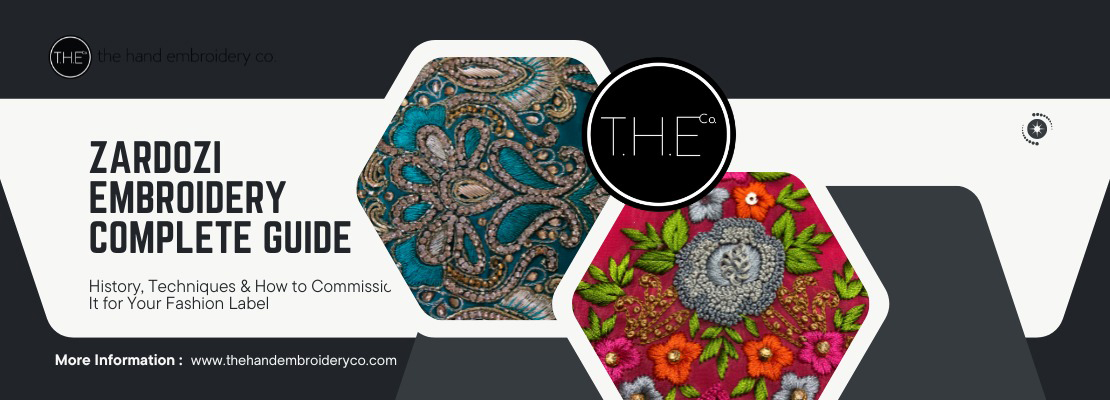
Zardozi is a form of Indian hand embroidery that uses metallic threads — traditionally gold and silver — along with beads, sequins, and gemstones to create dense, ornate patterns on fabric. Originating in the Mughal courts of 14th-century Persia, zardozi is today used extensively in luxury couture, bridal fashion, and high-end home textiles worldwide.
There's a garment at the Victoria and Albert Museum in London — a detail of a Mughal court coat, probably from 17th-century Agra — where the embroidery is so dense with gold thread and pearls that the fabric beneath is almost invisible. The craftsmanship is architectural in its precision. Every motif is exact. Every metallic thread is placed with intention.
That coat was made using zardozi.
More than 400 years later, the same technique is being used in ateliers in Mumbai, by artisans whose knowledge was passed down through generations, to create pieces for fashion labels in Paris, New York, Dubai, and London.
If you're a fashion designer, boutique owner, or brand sourcing director who has been looking for the right hand embroidery partner — understanding zardozi is not just educational. It's the beginning of understanding what sets hand-embroidered luxury apart from everything else on the market.
What Does "Zardozi" Mean?
The word zardozi comes from Persian: zar meaning gold, and dozi meaning embroidery. Literally: gold embroidery.
In practice, modern zardozi uses a range of metallic threads — not just real gold — combined with embellishments like sequins, beads, pearls, crystals, and semi-precious stones. But the defining character of zardozi remains the same as it was in the Mughal era: rich, raised, three-dimensional metallic work that transforms plain fabric into something unmistakably regal.
The History of Zardozi: From Mughal Courts to Global Couture
Zardozi originated in Persia (modern-day Iran) and came to India with the Mughals in the 14th century. Under the patronage of emperors like Akbar, Jahangir, and Shah Jahan, zardozi flourished in the royal courts. Artisans embroidered the emperor's robes, elephant trappings, tent walls, and royal canopies with gold and silver thread in patterns drawn from Mughal court architecture — paisleys, lotus flowers, vines, geometric grids.
The craft declined during British rule as mass production replaced royal patronage. After India's independence in 1947, a revival of traditional handicrafts brought zardozi back — this time not just for royalty, but for the emerging luxury fashion market.
Today, zardozi from Delhi, Agra, Lucknow, and Mumbai appears on international runways, in luxury bridal collections, and in the interiors of five-star hotels from Dubai to Singapore.
Related Article - Dressing Dreams: How Haute Couture Embroidery Suppliers Turn Fabric into Masterpieces
How Is Zardozi Made? The Production Process Step by Step
Understanding how zardozi is made is important for any buyer, because the production process directly affects your lead times, pricing, and what's achievable at different MOQs.
Step 1 — The Adda Frame
The fabric to be embroidered is stretched tightly over a wooden frame called an adda — a long, low rectangular structure around which multiple artisans can sit and work simultaneously. The adda keeps the fabric taut, which is essential for the precision zardozi requires.
Step 2 — Design Transfer
The design is first sketched on thin paper. The paper stencil is placed over the fabric, and the pattern is traced by piercing small holes along the design lines with a thin needle. A coloured powder (often chalk or charcoal) is then rubbed across the stencil, leaving the design printed directly on the fabric. The paper is removed, and the artisans begin working from the powder outline.
Step 3 — The Embroidery Work
The primary tool for zardozi is the aari — a hooked needle that resembles an awl. The artisan holds the thread beneath the fabric and uses the aari hook to pull it through from the top, creating a chain stitch. For metallic threads (which cannot be knotted easily), the thread is coaxed through the fabric by a combination of pushing from below and pulling from above.
Different zardozi techniques use different materials and stitching approaches (see next section). Complex pieces may involve multiple artisans working on the same frame simultaneously.
Step 4 — Embellishment Application
Beads, sequins, pearls, crystals, and metallic trims are applied during embroidery using a combination of stitching and — for certain lightweight elements — adhesive. At T.H.E. Co., all embellishment work is done by hand by trained artisans, not applied by machine.
Step 5 — Quality Inspection and Finishing
Completed pieces are inspected for consistency of density, alignment, and thread security. The fabric is gently steamed if needed, the powder markings are cleaned, and the piece is prepared for shipping.
The 7 Main Types of Zardozi Work
Not all zardozi is the same. The technique encompasses several distinct sub-styles, each producing a different visual and textural effect:
1. Zari Work
Uses metallic thread — typically gold or silver — woven and sewn into elaborate floral and paisley patterns. The shimmer comes from the metallic content of the thread itself. Classic, regal, and the most historically authentic form of zardozi.
2. Aari Work
3. Dabka Work
Uses tiny, coiled metallic wires (dabka) stitched in raised formations that simulate three-dimensional depth. The raised texture of dabka catches light dramatically, making it a favourite for statement fashion pieces and red-carpet occasions.
4. Kundan Work
Uses flat, polished pieces of glass or metal — set like gemstones — to create a glittering, jewel-like effect on fabric. Frequently used in bridal wear where maximum sparkle is the goal.
5. Resham Work
Uses fine silk thread (resham) rather than metallic thread, creating an embroidery that is elegant and understated. Softer and less heavy than metal-thread zardozi — ideal for lighter fabrics like chiffon and organza.
6. Tilla Work
Traditional to Kashmir, tilla uses flat metallic strips woven into patterns on heavy fabrics like shawls and pashminas. Creates a distinctive woven-metallic texture that is different from the stitched look of most zardozi.
7. Mukaish / Badla Work
Uses flat, tiny metal sequins (badla) stitched individually into the fabric using a special technique. Creates an all-over shimmer effect that is at once luxurious and delicate. Popular for evening wear and brides' dupattas.
Related Article - Top 10 Free Hand Embroidery Patterns ThehandembroideryCo
What Fabrics Work Best for Zardozi?
Zardozi can be applied to a wide range of fabrics, but some are better suited than others:
Fabric |
Suitability |
Notes |
|---|---|---|
Velvet | Excellent | Dense pile holds metallic thread well. Classic for heavy zardozi. |
Silk | Excellent | Lustrous base enhances metallic shimmer. Most common couture. |
Organza | Very good | Sheer base creates delicate, floating effect with lighter zardozi. |
Brocade | Very good | Adds a second layer of metallic texture beneath the embroidery. |
Chiffon | Good | For lightweight aari-style zardozi. Requires careful handling. |
Cotton | Good | For home textiles, casual/luxury-casual fashion. |
Leather/Suede | Possible | Specialist application — consult directly for feasibility. |
At T.H.E. Co., we work with all of the above. If you have a specific fabric in mind, send it as a sample with your enquiry — we will confirm suitability before production begins.
Where Is Zardozi Made in India?
India's primary zardozi manufacturing hubs are:
- Lucknow, Uttar Pradesh — the most historically significant centre. Lucknow artisans are renowned for delicate, detailed work with fine metallic threads.
- Delhi and Agra — high-volume production centres serving both domestic fashion and export markets.
- Mumbai, Maharashtra — home to export houses like T.H.E. Co. that combine traditional artisan skill with modern quality management, certifications, and international shipping infrastructure.
Mumbai's advantage for international buyers is its combination of artisan depth and business infrastructure — ISO certification, SEDEX social compliance, international courier partnerships, and English-speaking client teams.
Zardozi in Modern Fashion: How Global Designers Use It
Zardozi is no longer confined to bridal wear and festive occasion garments. In 2026, the most creative uses of zardozi are appearing in:
- Haute Couture gowns — evening wear and red-carpet pieces where dense metallic embroidery creates the garment's visual centrepiece.
- Luxury accessories — handbags, evening clutches, embroidered shoes, and belts.
- Bridal fashion — lehengas, wedding gowns, reception sarees, and embroidered veils.
- Hotel and luxury interior textiles — cushion covers, wall panels, table runners, and embroidered drapery for five-star properties.
- Contemporary ready-to-wear — lighter zardozi on jackets, blazers, and tops as a craft-forward luxury detail.
- Modest fashion — embroidered abayas, kaftans, and occasions-wear for the Middle East and international modest fashion market.
If you are sourcing for any of these categories, T.H.E. Co. has worked in all of them.
How to Commission Custom Zardozi Embroidery: The T.H.E. Co. Process
Commissioning custom zardozi through T.H.E. Co. follows a clear five-step process:
Step 1 — Share Your Design or Mood Board
Step 2 — Receive a Free Sample Swatch
Before any production commitment, we create a free sample swatch using your design on your chosen fabric. This gives you a hands-on preview of the technique, thread quality, and finish. You can request multiple technique options (zardozi, aari, dabka) on the same swatch to compare.
Step 3 — Approve and Source Materials
Once the swatch is approved, we move to materials sourcing — fabric, metallic threads, beads, sequins, and any specialist trims. We source from trusted suppliers across Mumbai, Surat, and internationally as needed. All materials are checked against REACH compliance standards.
Step 4 — Production
Embroidery production is carried out entirely in-house at our certified workshops by our 175+ artisans. Lead time for production depends on the complexity and quantity of your order — typically 4–8 weeks for a standard collection order. We provide production updates throughout.
Step 5 — Quality Check and International Shipping
Every finished piece is inspected by our QC team. We ship internationally via trusted courier partners, or coordinate with your logistics account if preferred. All pieces are packaged to protect the embroidery during transit.
Your designs are 100% protected throughout this process. We never copy, share, or replicate client designs. Our design protection commitment has been the foundation of our relationships with 155 clients across 12 countries over 45 years.
Request a free zardozi swatch today: WhatsApp T.H.E. Co. — Tell us your fabric, design concept, and technique preference. We'll get back within 24 hours.
Related Article - Custom Hand Embroidery for Brides: A Timeless Wedding Trend
Why Choose T.H.E. Co. for Zardozi Embroidery?
There are dozens of embroidery manufacturers in India. Here is what makes T.H.E. Co. different:
- 45 years of expertise — not a new entrant but a company with four decades of institutional knowledge in high-end hand embroidery
- 175+ in-house artisans — all on our payroll, all trained and quality-managed, with no subcontracting
- Design confidentiality — we have never copied or shared a client design in 45 years of operation. This is not a policy — it is a core value.
- 12 countries served — we understand international buyers, international shipping, and international quality expectations
- 5,500+ sample swatches created — which means we have encountered and solved almost every challenge a complex embroidery order can present
Ready to enquire? Email: info@thehandembroideryco.com | WhatsApp: +91 9920914431 | Enquire via website
Frequently Asked Questions About Zardozi Embroidery
What is zardozi embroidery in simple terms?
Zardozi is a type of Indian hand embroidery that uses metallic threads, beads, and sequins to create ornate, raised patterns on fabric. It originated in Persian-Mughal royal courts and is today used in luxury fashion, bridal wear, and high-end home textiles. The word means "gold embroidery" in Persian.
What is the difference between zardozi and aari embroidery?
Zardozi refers to the overall style — characterised by metallic threads, dense raised work, and opulent materials. Aari refers to the specific needle tool (a hooked awl) used to stitch the embroidery. In practice, aari is one technique used within zardozi. You can have aari-style zardozi, but not all aari work is zardozi — aari is also used for silk threadwork embroidery without metallic elements.
Is zardozi hand embroidery or machine embroidery?
Traditional zardozi is purely hand embroidery. Each stitch is made by hand using the aari hook by skilled artisans. Machine embroidery can replicate some aspects of zardozi's appearance, but cannot achieve the raised three-dimensional texture, the complex mixed-material work (beads, bullion, crystals), or the precision of technique-specific details. For couture and luxury fashion, hand zardozi has no equivalent substitute.
What fabrics are used for zardozi embroidery?
Zardozi is most commonly worked on silk, velvet, organza, brocade, and chiffon. Velvet and silk provide the richest base for heavy metallic work. Organza and chiffon are used for lighter, more delicate zardozi. The right fabric depends on the garment type, design weight, and the intended zardozi technique.
How much does custom zardozi embroidery cost?
Pricing for custom zardozi depends on four variables: the complexity of the design, the technique used (dabka and kundan are more labour-intensive than basic zardozi), the materials specified (real gold threads vs metallic polyester vs silver), and the quantity ordered. T.H.E. Co. provides a quote after reviewing the design and swatch approval. Contact us with your design brief for a pricing estimate.
How long does a zardozi embroidery order take?
A standard sample swatch takes 7–14 business days. Production for a collection order typically takes 4–8 weeks depending on complexity and quantity. Rush orders may be accommodated subject to current workshop capacity — discuss timelines with our team at the enquiry stage.
Can zardozi embroidery be washed?
Hand-embroidered zardozi pieces should be dry cleaned only. Water can damage metallic threads, loosen beads, and cause fabric distortion. For garments intended for frequent wear, discuss fabric choice and thread type during the design phase — some constructions are more durable than others for specific applications.